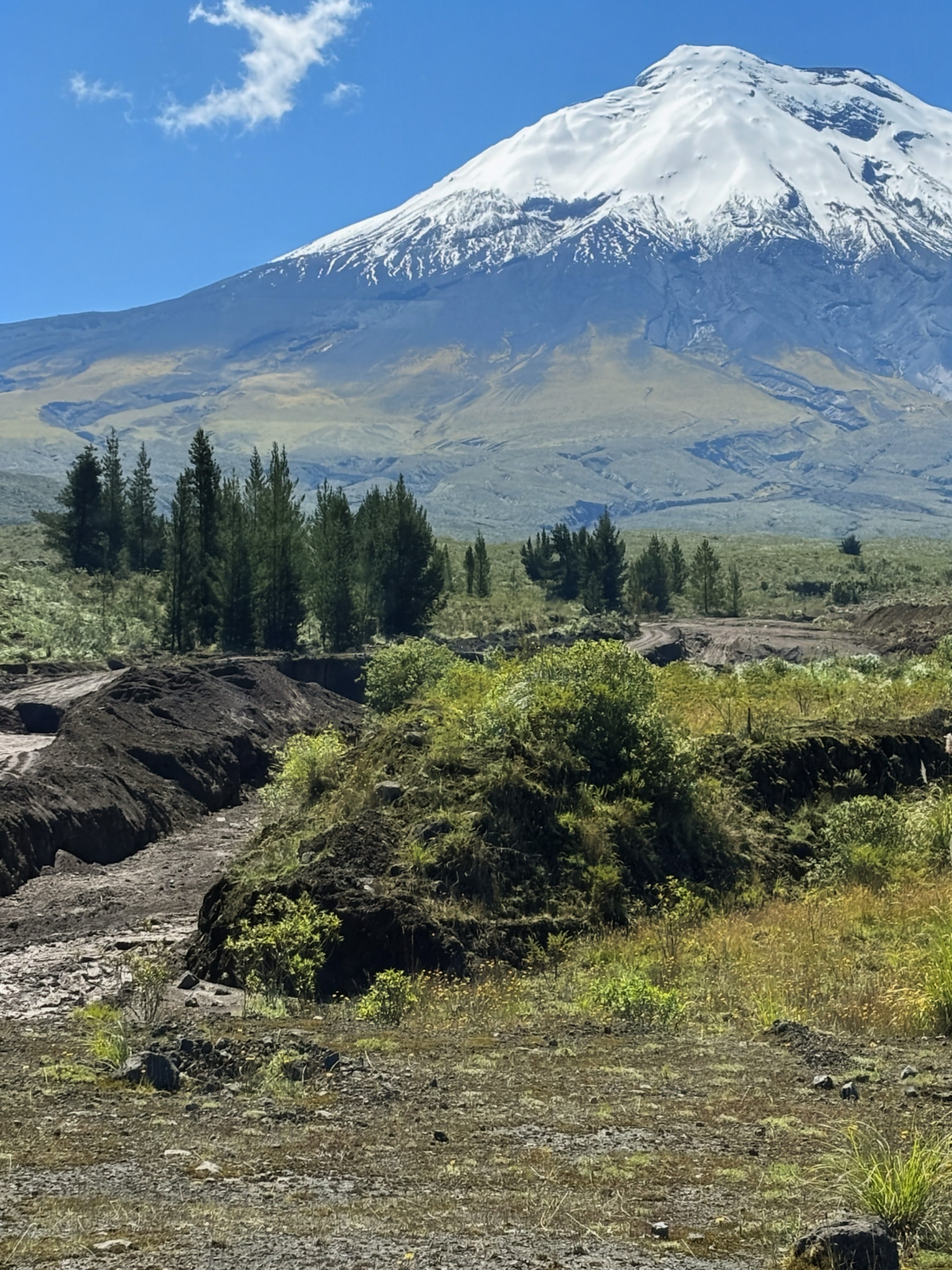
Cotopaxi, in Ecuador, is enormous. It took my breath. Its slopes and snow-capped tip dominate the landscape; it’s impossible to ignore. Majestic. But its true power isn’t in what you see. Beneath the surface lies a deep, hidden force. It’s molten, pressurized, and alive. What appears still and silent (and it was so quiet) above is sustained by something unseen below. In the same way, the human heart may look steady on the outside, but the real strength…or danger comes from what’s being formed beneath the surface.
Two brothers grew up in the same abusive home. Same parents. Same chaos. Same wounds. One grew up hardened; he was angry, distant, closed off, a drug addict. The other grew up to be a compassionate father; he was gentle, aware, deeply anchored. When asked how they got to where they were, they both said, “With a father like mine, what do you expect?”
Same seed. Different soil.
Jesus told a story like that in the parable of the Sower. The seed, the Word of God, was the same every time. But the outcomes were radically different because of the condition of the soil. Some hearts were hard, some shallow, some crowded, and some ready. The miracle wasn’t in the seed changing. The wonder-working power was in the soil being cultivated.
The human heart is not neutral ground. It is dynamic, living, and formable. Scripture says in Proverbs 4:23, “Guard your heart above all else, for it determines the course of your life.” That’s not poetic exaggeration…it’s reality. Everything flows from the heart: our decisions, reactions, relationships, and ultimately, our direction.
I very much dislike the phrase, “the heart wants what the heart wants.” That phrase sounds freeing, but it’s dangerous. An uncultivated heart doesn’t “want” rightly. A broken, twisted, or hardened heart doesn’t lead to life; it leads to death and destruction. The heart must be formed through (discipline) discipleship.
I know this personally.
There was a season in my life when my heart was congested (and sometimes still is). It was full of noise, pressure, expectations, and quiet bitterness I didn’t even know how to name. From the outside, things may look fine, but internally, we all tend to fall apart sometimes. During these seasons, my posture changes. My face carries it. My reactions reveal it. You can’t hide the condition of your heart. It leaks out in your tone, your body language, your decisions, and your relationships.
Psychology even backs this up. Studies show that chronic stress and unresolved emotional wounds affect not just mental health, but physical expression, such as facial tension, posture, and even how we interpret others’ intentions. Research also shows that intentional practices like reflection, gratitude, and spiritual engagement significantly improve emotional regulation and overall well-being. In other words, what we cultivate internally becomes visible externally. (Citations available upon request)
Jesus described hearts that are so hard that truth can’t penetrate them. Hearts that are shallow respond quickly but have no root, so they crumble under pressure. Hearts that are crowded due to being choked by worries, wealth, and distractions. And then there are cultivated hearts. These are soft, deep, and clear, where the seed produces thirty, sixty, or even a hundredfold.
That cultivation doesn’t happen by accident.
Think about the Chinese bamboo tree. For years after planting, nothing seems to happen above ground. You water it, tend it, and wait… and still nothing visible. But beneath the surface, roots are forming deep, wide, and strong. Then suddenly, in a short period, it shoots up dramatically. They can grow as tall as 50ft. The growth wasn’t sudden; it was prepared.
That’s how God often works in the heart.
There are seasons where it feels like nothing is happening. No visible change. No breakthrough. But beneath the surface, God is doing root work if we’re willing to cultivate the soil.
So how do we cultivate the heart?
First, we guard it. That means being intentional about what we allow in. The voices, influences, and patterns of thought can change us slowly over time. A neglected heart becomes hard or cluttered.
Second, we prepare it. Just like soil needs to be broken up, so does the heart. That often happens through humility, repentance, and honest reflection. Brokenness, when brought to God, becomes fertile ground.
Third, we feed it. The primary way we cultivate the heart is through the Word of God and communication (Prayer) with Him. Scripture isn’t just information; it is the seed. Prayer isn’t just talking; it’s alignment with Christ. Together, these two things soften, deepen, and clear the soil.
And finally, we trust the unseen work. Roots take time. Transformation isn’t always visible at first. But if the soil is right, growth is inevitable.
The two brothers started with the same seed. The difference wasn’t what they were given; it was what was cultivated.
The same is true for us.
Our hearts can be broken, twisted, hardened, or congested, but they can also be healed, softened, and made ready. And when they are, the wonder-working power of God moves through them in ways that change everything.
Because in the end, the condition of the heart doesn’t just shape a life, it gives us Life!